Silicon Valley's Moral Crossroads: The AI Ethics Reckoning That America Can't Afford to Ignore
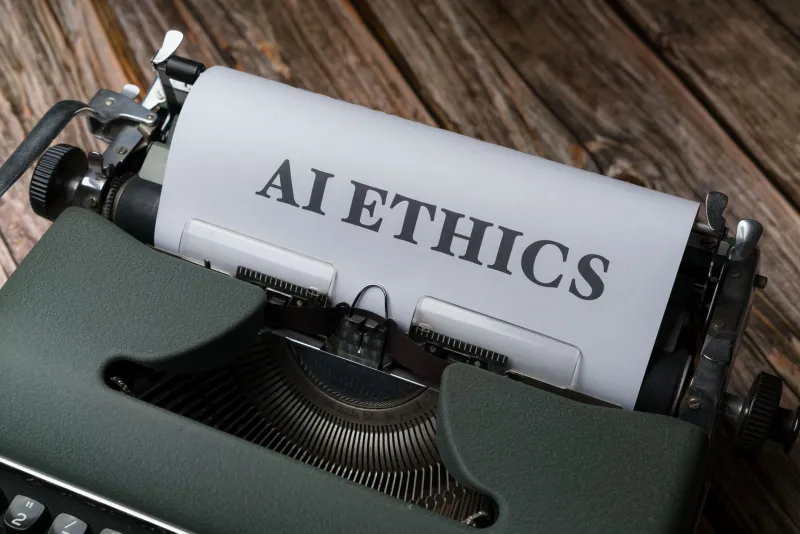
Somewhere between a Senate hearing where a 70-year-old senator asks a tech CEO to explain how the algorithm works, and a startup raising $200 million to ship a model trained on data nobody fully audited — there's a conversation America desperately needs to have. Not the polished, PR-approved version. The real one.
We're at a crossroads with artificial intelligence, and the road signs are getting harder to read. Innovation is accelerating. Regulation is stumbling. And the companies sitting at the center of this storm are making choices right now that will echo for decades.
Speed Versus Accountability: A False Choice Being Sold as Inevitable
The dominant narrative coming out of major tech hubs goes something like this: regulation slows innovation, ethical guardrails create competitive disadvantages, and if American companies don't move fast, China will eat our lunch. It's a compelling argument — emotionally, anyway. It's also dangerously incomplete.
The framing of speed versus responsibility as a binary choice is itself a kind of intellectual sleight of hand. Some of the most durable tech companies in history — think early Google, early Apple — built their initial dominance on trust as much as technology. Users adopted their products because they believed the companies were, at some fundamental level, not working against them.
That social contract is fracturing. And the AI era is stress-testing it in ways we haven't seen before.
What's Actually at Stake
This isn't abstract philosophy. The decisions being made in boardrooms and model training labs right now have tangible downstream consequences for real Americans.
Consider hiring algorithms. A 2023 investigation by the ACLU found evidence that AI-powered screening tools used by major employers were systematically disadvantaging candidates from certain zip codes — a proxy, in many cases, for race and socioeconomic background. The companies deploying these tools largely didn't build them with discriminatory intent. But intent doesn't determine impact.
Or consider AI-generated content flooding news and social media feeds. When a model trained on partisan data starts generating political summaries that millions of users treat as neutral fact, the downstream effects on democratic discourse aren't hypothetical. They're already happening.
The question isn't whether AI can cause harm. We know it can. The question is whether the companies building it are willing to take that seriously before the harm scales.
Congress Is Trying — But the Gap Is Real
To be fair to American lawmakers, they're not entirely asleep at the wheel. The Biden administration's Executive Order on AI from October 2023 represented a genuine attempt to establish safety standards and transparency requirements. The proposed American Privacy Rights Act touches on data governance in ways that affect AI training pipelines. Several states — California, Colorado, Illinois — have pushed forward their own AI accountability legislation.
But here's the uncomfortable truth: the pace of legislative development is measured in years. The pace of model deployment is measured in weeks. That gap isn't just a policy problem. It's a power vacuum, and right now, the companies with the most to gain from minimal oversight are the ones filling it.
When the primary ethics guidance for many AI products comes from the companies' own internal review boards — teams that report up to the same leadership making revenue decisions — the structural conflict of interest is obvious. You wouldn't let a pharmaceutical company self-certify its own drug trials. The logic doesn't change just because the product is software.
The Long Game: Why Ethical Shortcuts Are Actually Terrible Business
Here's the argument that should resonate even with the most profit-focused executives: cutting corners on AI ethics isn't just morally questionable. It's a strategically terrible long-term bet.
Look at what happened to Facebook — now Meta — when its algorithmic amplification of divisive content became undeniable public knowledge. The reputational damage was severe, regulatory scrutiny intensified globally, and advertiser trust eroded in ways that took years to partially rebuild. The short-term engagement metrics looked great. The long-term cost was enormous.
AI systems that produce biased outputs, hallucinate critical information, or enable manipulation at scale are liability bombs with slow fuses. The companies that build responsibly — that invest in interpretability, that publish honest model cards, that create genuine external oversight mechanisms — are building something more durable than a quarterly earnings beat. They're building institutional trust. And in the AI era, institutional trust is a genuine competitive moat.
Anthropic, for all its complexities, has made constitutional AI and safety research central to its public identity. That positioning attracts certain enterprise clients and government partnerships that wouldn't touch a less accountable competitor. Responsibility, framed correctly, is a market differentiator.
What Responsible AI Leadership Actually Looks Like
This isn't a call for companies to stop innovating or for Congress to bury AI under bureaucratic red tape. It's a call for the industry to get serious about what accountability actually looks like in practice.
That means third-party audits of high-stakes AI systems — hiring, lending, healthcare, criminal justice — before deployment, not after harm is documented. It means genuine transparency about training data provenance and known model limitations. It means building diverse teams that include ethicists, social scientists, and people with lived experience of the harms these systems can cause — not as PR accessories, but as genuine decision-makers.
It means, frankly, that some products probably shouldn't ship until they're ready. That's a hard thing to say in an industry where the first-mover advantage feels existential. But it's the right thing to say.
The Superhero Problem
There's a reason we talk about AI in terms of superpowers. The capabilities are genuinely extraordinary — and like any extraordinary capability, they come with extraordinary responsibility. The most compelling superhero stories aren't about characters who are simply the most powerful. They're about characters who have to figure out what to do with that power, who they're accountable to, and what lines they won't cross even when crossing them would be easier.
American tech companies are holding more transformative power right now than any industry in history. The choice they're facing isn't really between profit and responsibility. It's between short-term extraction and long-term legitimacy.
The companies that figure that out — and act accordingly — won't just survive the coming regulatory wave. They'll be the ones still standing when the dust clears, having built something that actually deserves to last.